

Though today standing in genteel ruins, Ayutthaya offers a glimpse into the past glory of the long-lived kingdom of Siam. The ancient city abounds with remains of vast temples, Buddha statues, and monumental prang (reliquary towers).
Before Bangkok claimed the crown as the Thai capital, Ayutthaya had been the seat of the Siamese royal court for more than four centuries. It was founded in 1350 on an island surrounded by rivers on three sides, at the head of the Gulf of Siam. This strategic location, above the tidal bore at the time, protected the city from seasonal flooding and, more importantly, helped to prevent attacks from foreign warships.
In the ensuing centuries, Ayutthaya grew into one of the largest kingdoms in Southeast Asia, holding sway over a vast territory – much of what is now Thailand. The city itself became a political, economic, and cultural center, reflected through many extravagant temples, palaces, and reliquary towers. On the global stage, Ayutthaya’s rulers exchanged diplomats on a regular basis with imperial courts from near and far, including Beijing, Delhi, Edo (modern-day Tokyo), and even Versailles.
The royal capital of Siam for more than 400 years.
However, the sun descended on Ayutthaya in 1767 as Burmese armies overwhelmed the capital. Nearly everything was razed to the ground, forcing the new Siamese king to relocate the royal seat further south. Ayutthaya was abandoned and remains today as a UNESCO-inscribed World Heritage Site. Grassy spaces still occupy much of this area, but many monuments have been painstakingly restored. Their grand towers once again jut out into the blue sky, impressive as they did in the 15th century.


1. Wat Phra Si Sanphet
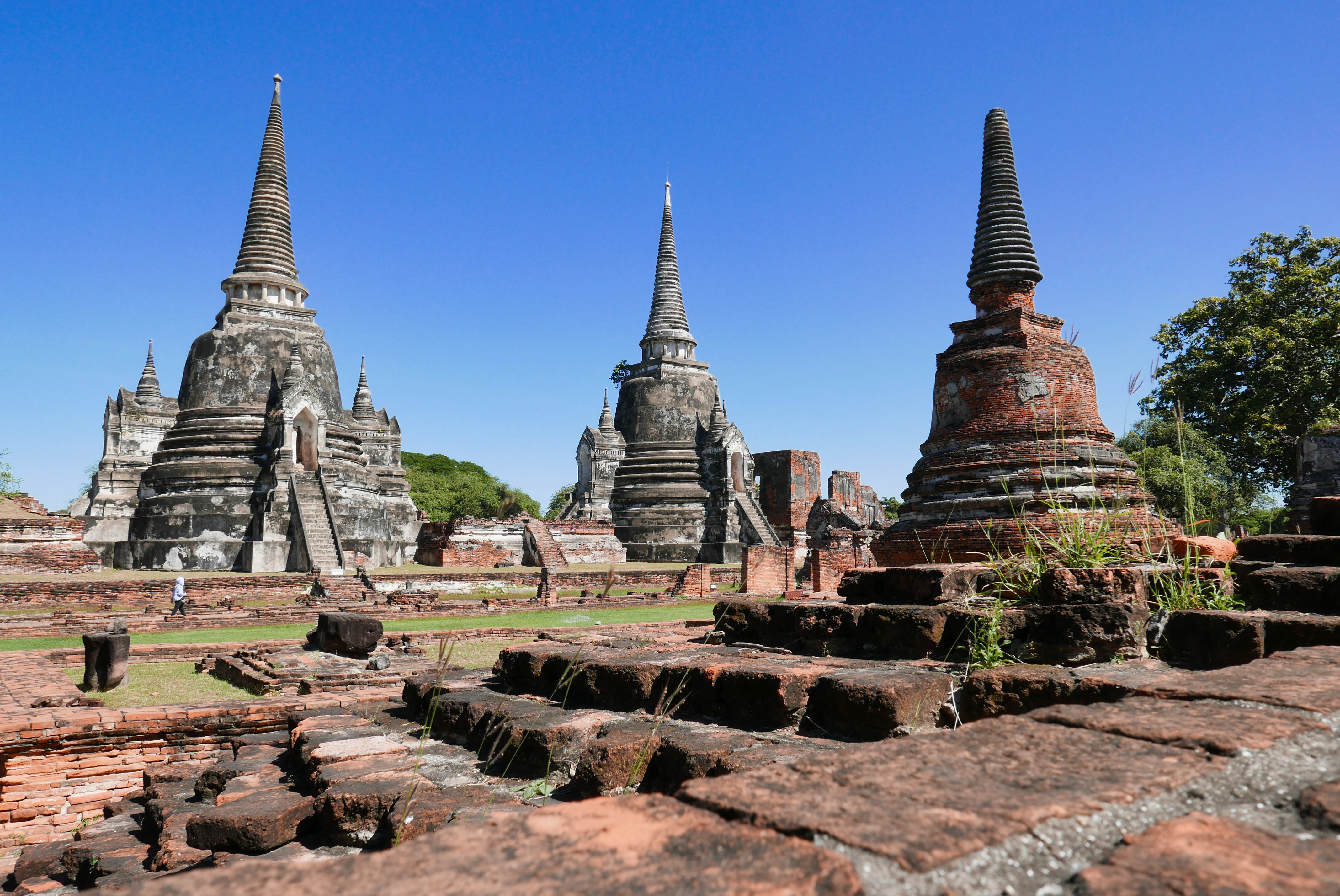
Characterized by three colossal bell-shaped chedis, Wat Phra Si Sanphet was the ancient city’s most sacred and largest temple. It was built in the 15th century as part of the royal palace to enshrine the ashes of Ayutthayan monarchs, Buddha images, and accouterments. A gigantic Buddha statue, likely adorned with resplendent gold leaves, used to reside within the complex. But everything was set on fire during the Burmese invasion in 1767.
The little remains of Wat Phra Si Sanphet take the form of miniature chedis, crumbled galleries, and high brick walls that encircle the entire complex. The large chedis are, however, mere reconstructions of the 20th century. Despite that, Wat Phra Si Sanphet stands as a testament to the economic vitality and sophisticated culture of Ayutthaya. The temple was so magnificent that it became a model for modern-day Wat Phra Kaew in Bangkok’s Grand Palace.



2. Wat Mahathat
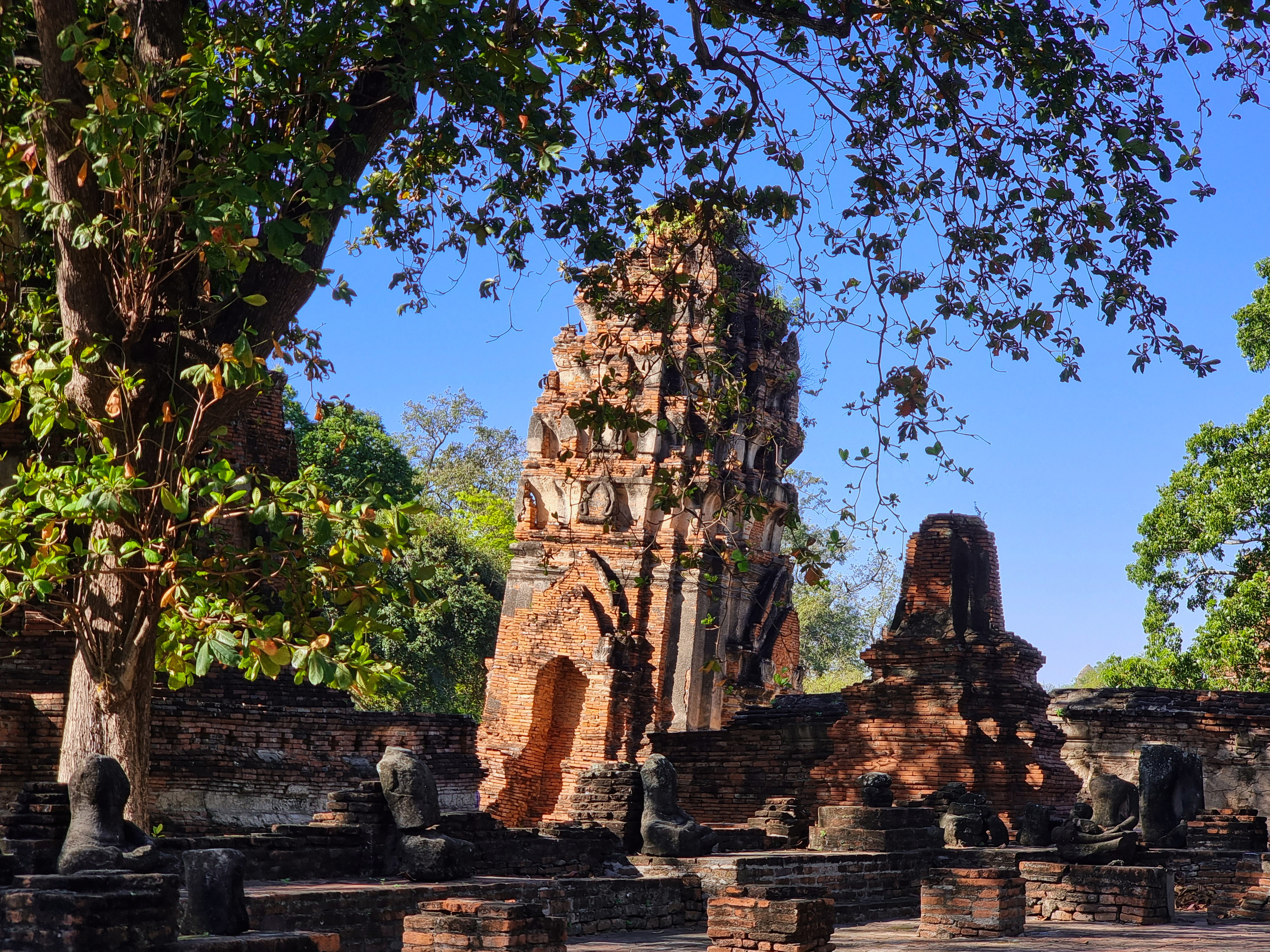
Across the vast grassland from Wat Phra Si Sanphet stands Wat Mahathat – a weathered temple that used to preserve holy relics and was the residence of the kingdom’s Supreme Patriarch. The complex once boasted a soaring Angkorian prang (reliquary tower), which reportedly rose to 50 meters high. Sadly, the structure collapsed twice, with the most recent case occurring in the early 1900s. Since then, it has been partially reconstructed.
What is left standing are several restored brick towers, chedis, the temple foundation, and a series of headless Buddha statues – clear evidence of the havoc wrought by the Burmese invaders. There is also a mystical Buddha bust entwined in the roots of a banyan tree that has become widely popular on social media. The reason why it was there is unknown, yet this iconic sight is revered by many Thais.


3. Wat Chai Wattanaram
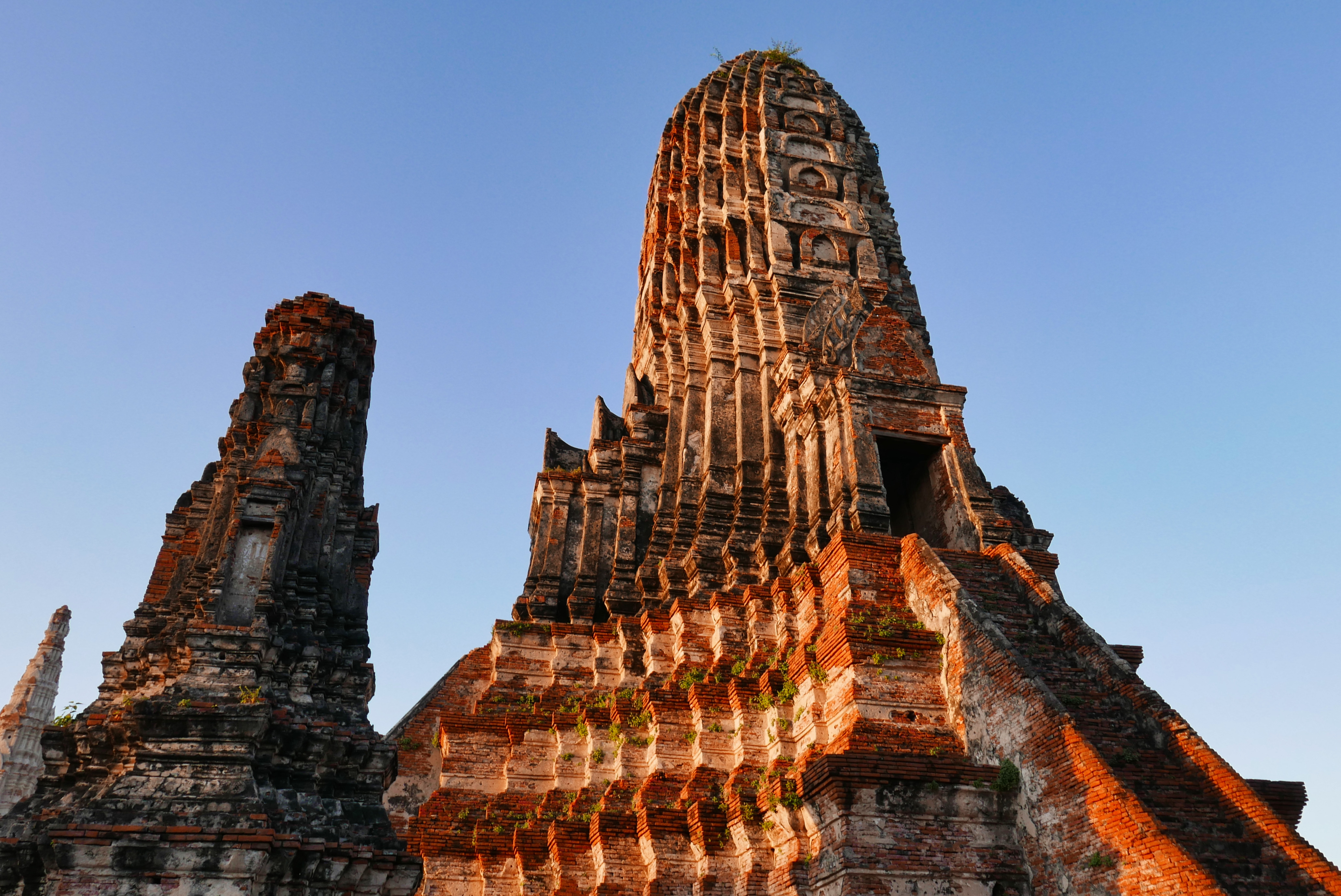
Of all the temples in Ayutthaya, Wat Chai Wattanaram stands out for its resemblance to Angkor Wat, both in layout and decorative elements. Designed as a mausoleum for the royal family, this 17th-century temple includes a monumental prang in the middle of an elevated platform representing Mount Meru, the abode of Hindu deities. Encircling it in a symmetrical order are eight smaller prangs adorned with stuccos and bas-reliefs. The interior, on the other hand, was reportedly furnished with murals depicting scenes from the life of Buddha.
Only fragments of these paintings and reliefs survived the Burmese invasion in 1767. The temple was torn down, despite being built outside of the main island. Around 120 Buddha statues that once sat around the central wall and entrance were also vandalized. Wat Chai Watthanaram continued standing in ruin until 1887 when Thailand’s Department of Fine Arts began the restoration. These days, the complex is considered one of Ayutthya’s finest structures. It looks particularly splendid at dusk when the last sun rays paint the intricate prangs in fiery red and orange shades.



4. Wat Yai Chai Mongkhon
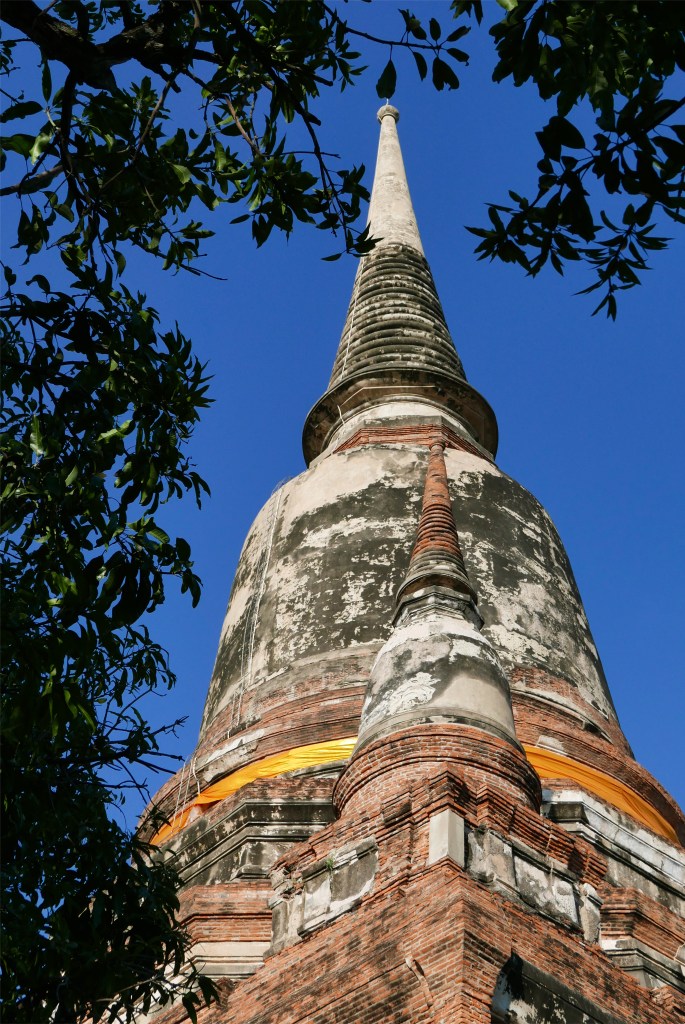
Also located outside the historic core is Wat Yai Chai Mongkhon, or the Great Monastery of Auspicious Victory – a restored temple complex best known for its tremendous chedi. It was first built in 1357 to house monks returning from ordination in Sri Lanka. Yet after an “auspicious victory” over a massive Burmese attack in 1593, the principal chedi was erected as a commemoration, hence the name.
This soaring structure, with its elevated square base and pointed tip, is the highest in Ayutthaya, at 60 meters tall. It has steep staircases leading up to the inner sanctum – home to several images of the Buddha covered with gold leaf. Outside, a panoramic platform allows visitors to have views of the temple grounds where subsidiary chedis, rows of statues, and a giant reclining Buddha are situated.


5. Chao Phraya National Museum
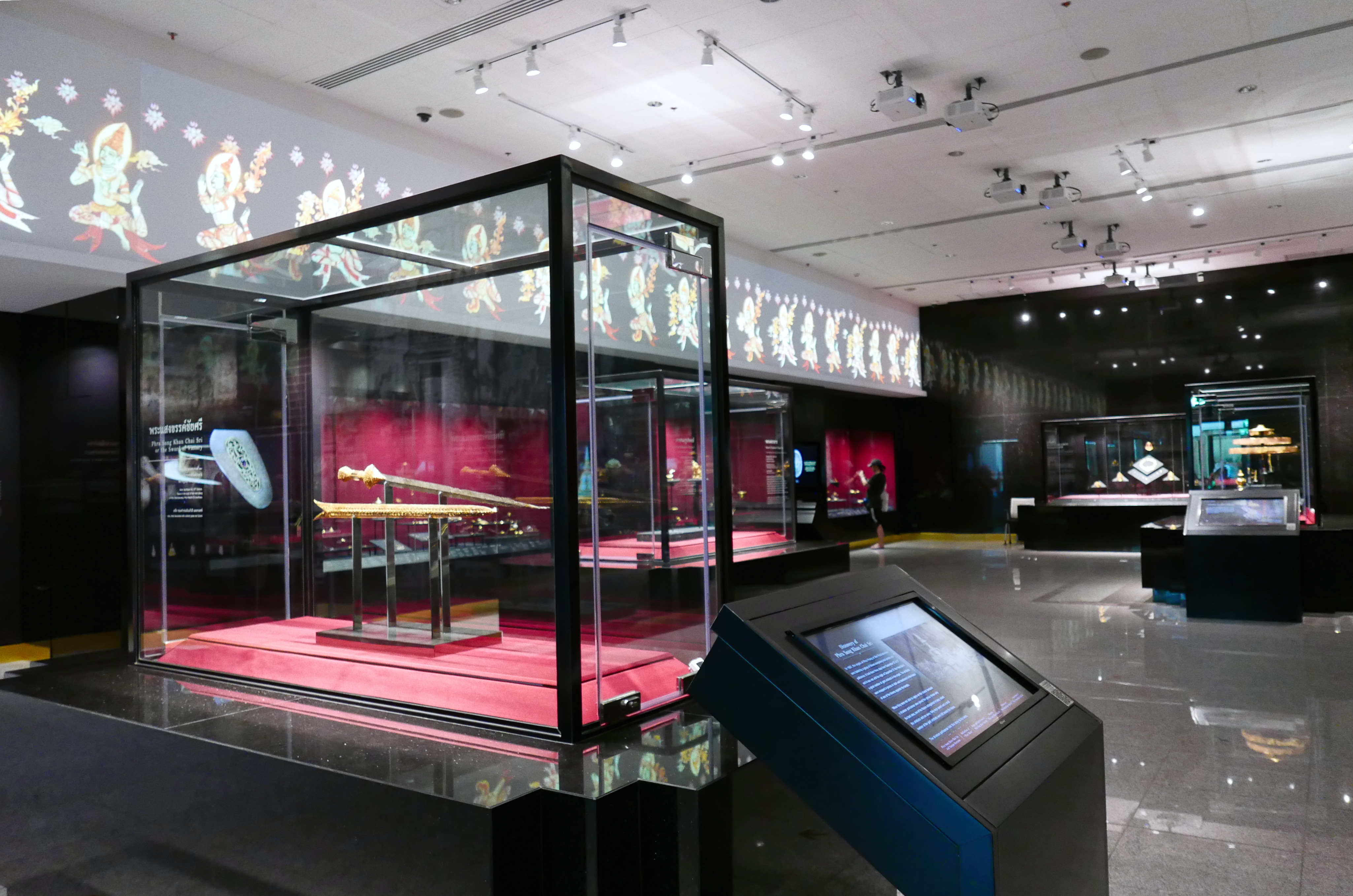
The former splendor of Ayutthaya is also showcased through a variety of antiques exhibited at the Chao Phraya National Museum, located at the heart of the old city. These invaluable artifacts were discovered during archeological excavations and renovations that began in the late 1950s. Over the years, more items have been added to the collection, making it one of Thailand’s most comprehensive museums.
The exhibitions feature architectural elements such as wooden gables or temple doors, pottery, and Buddha statues. Yet most striking are the treasures unearthed from the crypts of the main prangs of Wat Mahathat and Wat Ratchaburana. These include a miniature golden elephant encrusted with emeralds, a richly adorned stupa containing relics, and Phra Saeng Khan Chai Si – the golden sword of victory. Fragments of murals that once covered the prang’s interior are also on display.


Tips for visiting Ayutthaya
- Contrary to popular belief that Ayutthaya is compact and doable as a day trip, I found the city quite huge. It took me nearly two days to see a few main sights.
- Adding to that is the journeys to/from Bangkok which take at least 90 minutes each way (without traffic). Besides, there is little to no shade on the temple grounds, making a visit at noon relentlessly hot.
- The temples are scattered in and around the island, which is best circumnavigated by bike. Tuk-tuk is another alternative. The drivers will have a list of temples with names and images so you can point, and they will swiftly take you there. It’s possible to hire per hour.
Recommended Stay
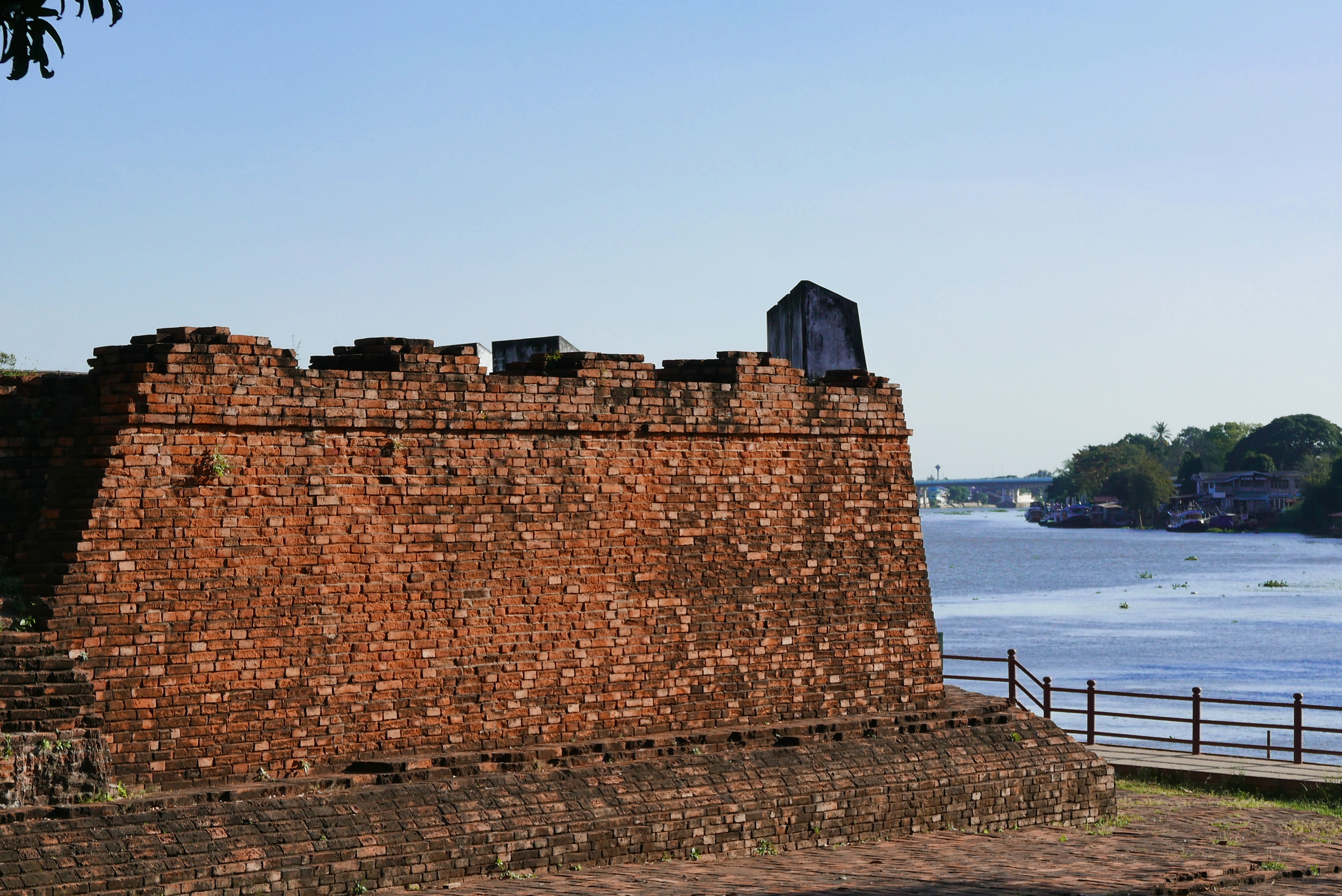
Sitting at the confluence of the Chao Phraya and Pasak Rivers, Baan Pomphet is a trendy boutique hotel whose namesake and architecture are derived from the nearby Ayutthaya-era fortress. It embodies a sense of minimalist M.C. Escher with steps, stairs, and roofs laid out distinctively. Yet the material of choice – handmade red bricks and salvaged timbers – and the carved doorknobs in the shape of Hanuman are clear indications of Thai culture.
The hotel contains only eight rooms in two colors: leaf green on the ground floor and jackfruit yellow on the upper floor. Each is stylishly furnished with pod-like beds and black-tiled bathrooms so that guests can focus on the remarkable views of the river, the cyan-colored pool, and the ancient bodhi tree dancing in the wind. A scaffolding-like structure separates the guest-only quarter from the contemporary riverside restaurant that specialises in traditional Thai cuisine, including the all-time favorite: grilled river prawn.


DISCLAIMER:
My recommendation is written based on my personal experience. It was neither sponsored nor solicited by Baan Pomphet or any third party. All texts and pictures reflect my opinions and are provided solely for informational purposes. I will not be liable for errors or damages using this information.


Ayutthaya is a remarkable place. I agree, you need more than a day trip from Bangkok to see it properly. Maggie
Definitely. It took me around 20 minutes to travel by tuk-tuk from one side of the town center to the other side. And that’s without traffic 🙂 Thanks for visiting, Maggie.
Such a beautiful place!
Thank you, Anna 🙂
Wat Chai Wattanaram is on top of my list of things I want to see in Ayutthaya. But I had never seen it bathed in the afternoon sun like in your photos. So ethereal! Almost everyone seems to go to this ancient city on a day trip from Bangkok, but I always think it would be nice to actually spend a few days there. This post confirms that. When did you go, Len? The weather looks perfect!
I went there in late December, Bama 🙂 Three days before Christmas. The temples even offered free admission during this period. With a few days, you will have time to visit the foreign settlements – another feature of a cosmopolitan Ayutthaya.
Fascinating information and beautiful photos Len. Although we didn’t get to Ayutthaya when we were in Thailand, it reminded me of other SE Asian ancient places – Angkor Wat and the temples of Bagan. Wonderful.
Alison
Well, it’s hardly comparable to Angkor or Bagan because most temples are in ruins. They are deliberately destroyed, so not much is left. But Ayutthaya is undoubtedly fascinating 🙂 Thanks for the kind words, Alison.
I visited Ayutthaya earlier this year when I was in Bangkok, as a day trip because I didn’t have much time. I definitely agree it deserves at least a overnight stay. Love your pictures of the temples!
Many thanks, Nic! I followed your journey through SEA. A memorable trip, isn’t it? 🙂